The Deep Science of Photobiomodulation: Understanding Systemic Effects and Photon Penetration of Red Light Therapy
Red light therapy (RLT) has been steadily gaining traction for its far-reaching potential health benefits. Its especially known for its ability to penetrate deeply into the skin and impact vital tissues and organs. With Australia at the forefront of the wellness boom, and the global industry now being worth an estimated $7 trillion (dwarfing the pharmaceutical sector by three times), we have to ask –just how effective is RLT really in reaching vital tissues such as muscles, bones, and internal organs to affect health? Understanding this can help us maximise its full potential.
Depth of Red Light Therapy Penetration
Red and Near-Infrared (NIR) light are the champions of deep skin penetration within the sunlight spectrum. It’s established that Red and Near-Infrared (NIR) wavelengths of light can penetrate between 1 to 50 mm into the skin. However, their penetration depth varies, ranging from a mere 1 mm to a significant 50 mm. This depth is influenced by several factors, including wavelength, intensity, and the mode of treatment application.
However, there’s a catch. Even if the light manages to penetrate 50mm, its intensity dwindles considerably, often leaving just a trace at that depth. This fact raises concerns about whether such light can significantly impact deeper tissues.
Interestingly, studies have observed benefits from Red and NIR light in areas deeper than the light itself can penetrate, or even in completely different parts of the body than the area treated. These effects are termed in the scientific literature as Systemic Effects, Indirect Effects, Abscopal Effects, Remote treatment, Global effects, or Bystander effects. Understanding these effects can help us revolutionise the application of red light therapy.
Systemic Effects of Red Light Therapy
When light photons are absorbed by cells, a series of reactions occur. These reactions can up-regulate ATP production, release nitric oxide, increase oxygen consumption, and even affect cell signaling. But do these effects only occur in the cell where the photon was absorbed?
What’s fascinating is that numerous studies have shown that these effects are not limited to the directly irradiated cells. A paper by Tuner and Hode highlighted that the impact of the laser beam can influence very distant parts of the body through metabolic mediators.
Such observations suggest that red light therapy can have systemic or “bystander” effects.
How Do Systemic Effects Occur?
Upon absorbing photons, cellular structures, especially the mitochondria, trigger several beneficial reactions. These include:
- ATP production boost.
- Nitric Oxide (NO) release.
- Enhanced oxygen consumption.
- ROS signaling.
- Forming EZ water.
This systemic influence can significantly enhance the healing process:
- Improved circulation and lymph movement
- Upregulation and release of stem cells into the bloodstream
- Immune Cell modulation
- Microbiome modulation, which can affect the brain and immune system
- Stimulation of cell-free mitochondria in the blood
Systemic Effects in Action
From enhancing skin health to treating kidney diseases, the systemic effects of RLT have shown promising results in various domains:
- Brain Treatments: Despite only 1-3% of Red/NIR light penetrating the scalp and skull, the brain still benefits from the treatment. This is attributed to the systemic effects activated in the scalp and the bone marrow.
- Wound Healing: Studies have indicated that wounds treated with RLT heal faster, even if only one of two identical wounds receives direct irradiation.
- Virus Combat: Recent studies in 2023 have demonstrated the systemic anti-inflammatory effects of RLT in treating a novel coronavirus.
- Kidney Treatment: Although direct photon reach to the kidney is hindered by various barriers, the systemic effects of RLT can still confer healing.
Harnessing Systemic Benefits
To leverage the systemic effects of RLT, one can:
- Target Directly: Even if photons might not penetrate deeper tissues, it’s still beneficial to direct the light onto the affected area.
- Target Remotely: For conditions like chronic brain diseases, targeting the gut or the tibia can stimulate systemic support.
- Non-Contact Therapy: Non-contact RLT, although superficial, can still offer systemic benefits. The key lies in using appropriate dosages and being patient for cumulative responses.
- Wavelength Consideration: Ensure the treatment remains within the therapeutic window of 600nm-1100nm.
- Multiple Wavelengths: Combining both Red and Near-Infrared often yields better results due to the activation of multiple systemic mechanisms.
However, the exact effects and benefits can vary based on the device’s design, power, duration of exposure, and other factors.
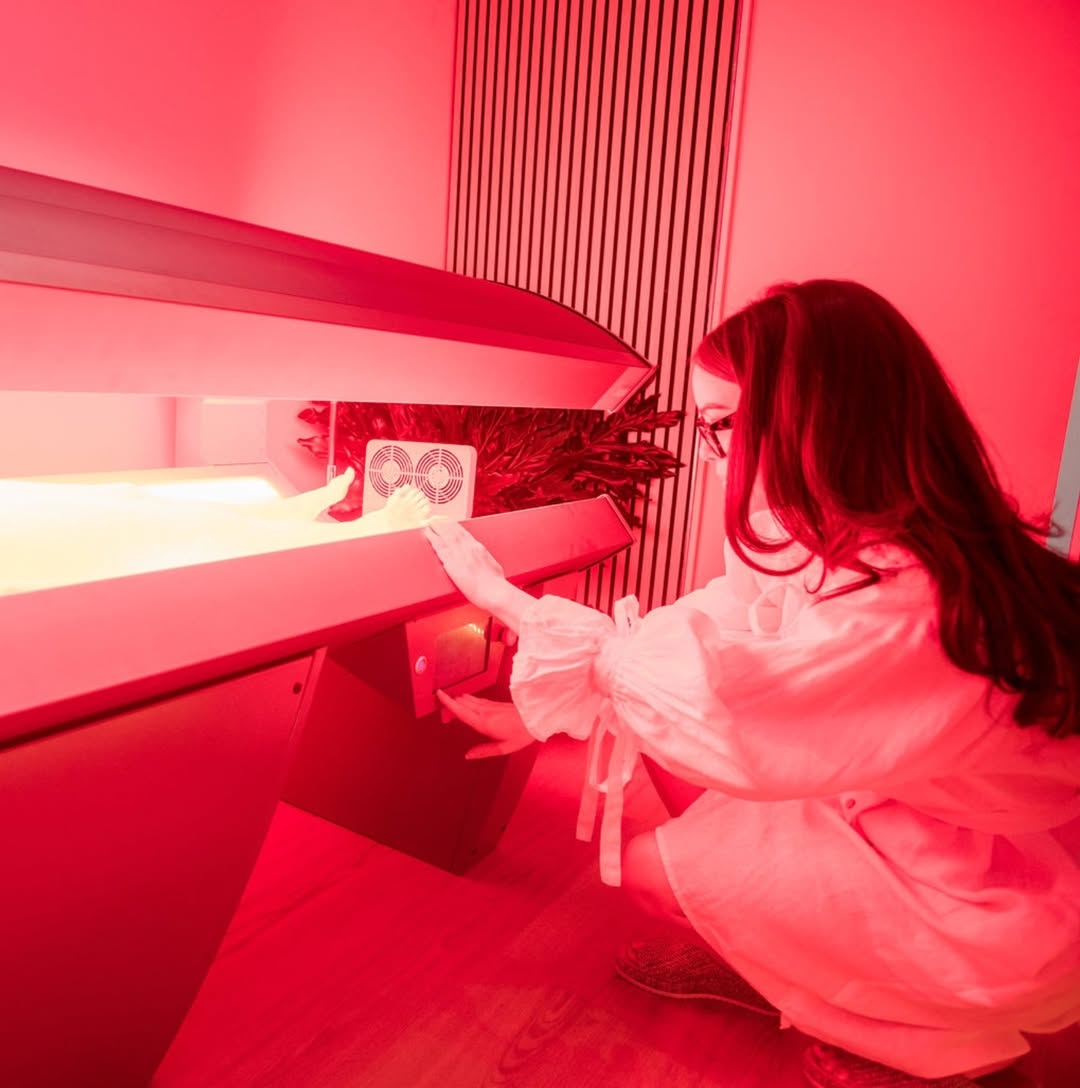
Total Xen LED
The Total Xen by Aesthetic Bureau (pictured above) is one of the most advanced, versatile and effective full body light therapy systems on the market today, delivering maximum tissue saturation with its cutting edge design and technology and precision craftsmanship. It utilises clinically proven Red 630nm/660nm light for skin health and NIR 850nm light for deeper penetration and is based on research findings from over 500 published double-blind studies and 5,000 laboratory studies. Red 630nm/660nm is primarily absorbed by skin cells and accelerates cell renewal and repair by increasing collagen production and promoting optimal skin health. It increases the body’s natural form of cellular energy (ATP) which kickstarts cells to regenerate faster. NIR 850nm can penetrate deeper into tissues compared to visible light which makes it especially useful for reaching muscles, joints, and even bones. Its deep penetration capabilities aid in pain relief, muscle recovery post-exercise, and even show promise in neuroprotection, addressing concerns related to brain injuries and neurodegenerative conditions. Other known benefits include enhancing cellular energy production, reducing inflammation, and promoting tissue healing.
Conclusion
Red light therapy, despite its superficial photon penetration, offers profound systemic effects beneficial for the body. Whether you’re looking at healing a wound or targeting deeper organs like the brain or kidneys, understanding and harnessing these systemic effects can pave the way for more effective treatments.
While the direct penetration of light plays a role, it’s the indirect, systemic mechanisms that truly amplify the benefits of RLT, making it a promising avenue for holistic health and well-being.
References:
- Johnstone DM, et al. “Exploring the Use of Intracranial and Extracranial (Remote) Photobiomodulation Devices in Parkinson’s Disease: A Comparison of Direct and Indirect Systemic Stimulations.” J Alzheimers Dis. 2021;83(4):1399-1413. Link
- Zimmerman, S. and Reiter, R. “Melatonin and the Optics of the Human Body.” Melatonin Research. 2019.
- JAN TUNÉR and LARS HODE. “It’s All in the Parameters: A Critical Analysis of Some Well-Known Negative Studies on Low-Level Laser Therapy.” Journal of Clinical Laser Medicine & Surgery. 1998. Link ↩
- Lee SY, et al. “A prospective, randomised, placebo-controlled, double-blinded, and split-face clinical study on LED phototherapy for skin rejuvenation.” J Photochem Photobiol B. 2007. Link ↩
- Mario A. Trelles & Inés Allones. “Red light‐emitting diode (LED) therapy accelerates wound healing post‐blepharoplasty and periocular laser ablative resurfacing.” Journal of Cosmetic and Laser Therapy, 2006. Link ↩