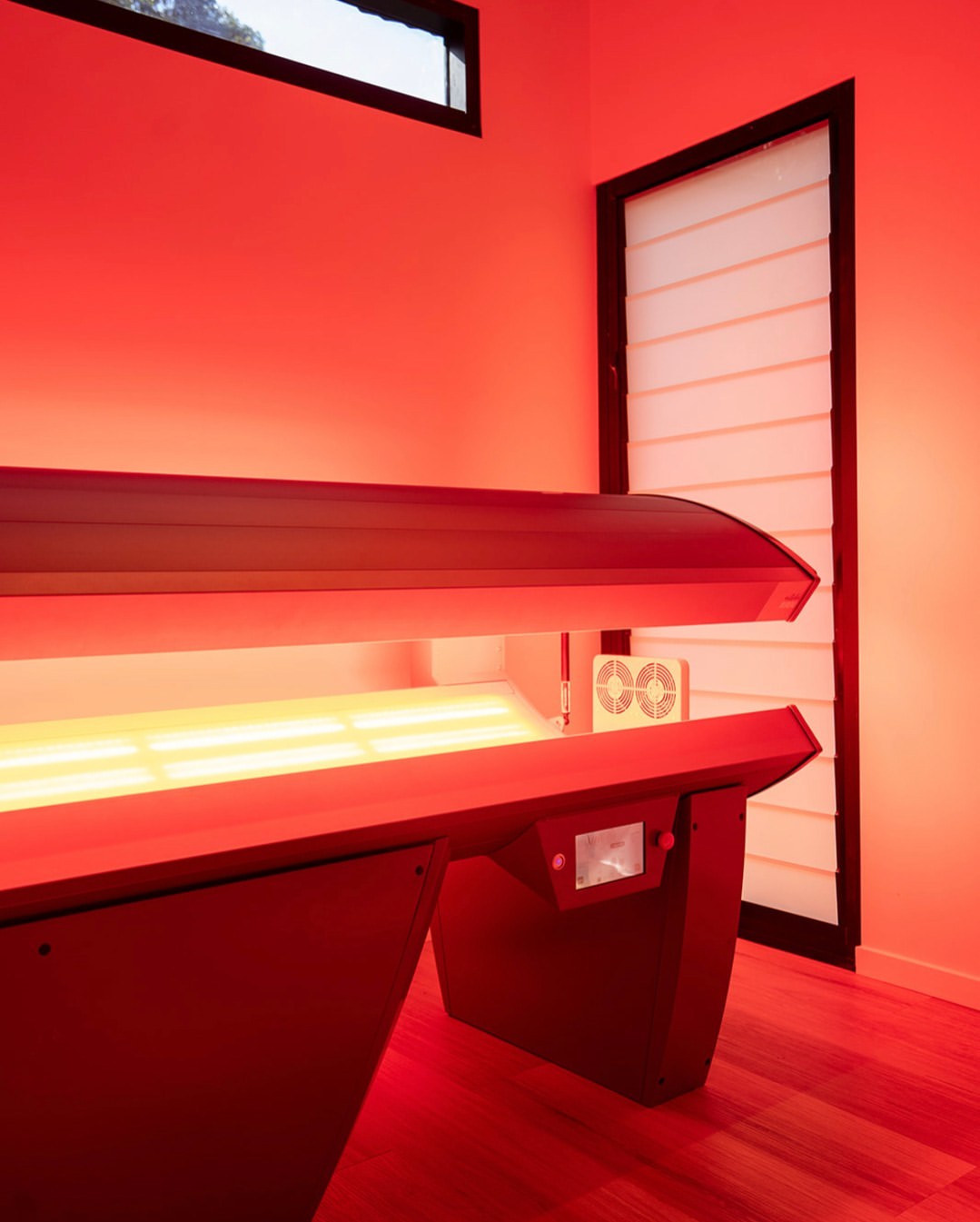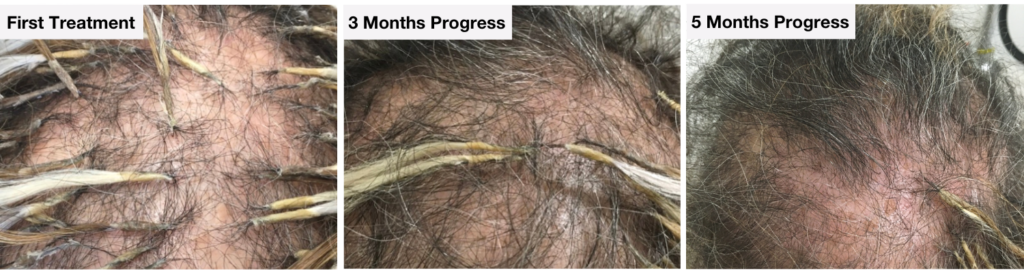
(5 month progress shots of a client who has suffered alopecia for 15 years. Courtesy of Cairns Clear Skin)
While most people would be familiar with both oral and topical medications such as Minoxidil when it comes to restoring hair loss, a lesser known but effective treatment is red light therapy for hair growth. Red light therapy (RLT) is an innovative approach rooted in a discovery from the 1960s, which has evolved into a significant area of research and practice in hair restoration.
Understanding Alopecia
Alopecia (the medical term for hair loss) is a common disorder that impacts a significant portion of the population. In Australia alone, about 20% of men face baldness in their 20s, and nearly half of all women experience hair loss at some point in their lives, as reported by the Royal Australian College of General Practitioners. Alopecia can be attributed to various factors, including genetics, hormonal changes, medical conditions, and aging. Often dismissed as an inevitable aging byproduct, hair loss can have profound psychological impacts.
The Emergence of Red Light Therapy
Red light therapy’s discovery was first prompted when a Hungarian scientist in the 1960s studying the effect of lasers on tumours in mice, discovered that the laser light was inducing new hair to regrow faster on the mice’s shaved skin while promoting healing of wounds. This serendipitous finding laid the foundation for what we now know as red light therapy or photobiomodulation. Today red light therapy has become a novel field of investigation gaining increased momentum in multiple medical modalities.
How Does Red Light Therapy Work?
RLT involves exposing the scalp to red and near-infrared light, penetrating deeply to the mitochondria of cells. This stimulation enhances mitochondrial function in hair follicle cells, promoting hair growth. Red light therapy has shown promising results in increasing the duration of the anagen (growth) phase of hair follicles, attributed to its stimulation of mitochondrial activity in stem cells.
Scientific Evidence
Numerous studies have demonstrated the efficacy of RLT in treating hair loss. A significant increase in hair density and thickness has been observed, along with improvements in self-reported hair fullness, independent of sex. Factors like session duration, light pulsing, and energy fluence have been identified as influential in treatment effectiveness. A study published in the PMC highlights its potential in stimulating hair growth, indicating a positive effect on hair density and thickness. Another study from the PMC supports these findings, showing significant improvement in patients with androgenetic alopecia.
Red Light Therapy and Different Types of Alopecia
RLT plays a unique role in treating various forms of alopecia:
- Androgenetic Alopecia (AGA): RLT appears to extend the anagen phase and stimulate epithelial stem cells in the hair follicle, enhancing hair growth.
- Alopecia Areata (AA): By altering the environment in the hair follicle, RLT reduces inflammation, a key factor in AA.
- Chemotherapy-induced Alopecia (CIA): RLT helps reduce apoptosis during chemotherapy, protecting healthy hair follicle cells.
Red Light Therapy in Practice
Red light therapy for hair loss can be administered in clinics or at home using specialised devices. It is non-invasive, painless, and free from the side effects often associated with pharmacological treatments. Its simplicity and ease of use make it a favourable option for many.
Combination Therapies
In aesthetic practices, red light therapy is not just limited to treating hair loss. It’s often part of combination therapies, enhancing the efficacy of topical and systemic treatments. Its versatility allows integration with other hair loss treatments, potentially amplifying their effects.
Case Study: Real-world Impact
An illustrative example is a client who suffered from alopecia for 15 years and experienced significant improvement after undergoing Xen LED light therapy, as shown in the above image. The progress shots over five months demonstrate the therapy’s potential in real-life scenarios.
Safety and Guidelines
Red light therapy for hair loss is generally considered safe. However, it’s crucial to follow manufacturer guidelines regarding duration and frequency to ensure effectiveness and avoid potential side effects.
Conclusion
Red light therapy offers a novel, non-invasive option for hair loss treatment, presenting a promising addition to the hair restoration toolbox. While more research is warranted, the current evidence and real-world success stories position RLT as a significant modality in combating various forms of alopecia.
References
- PMC Article on Red Light Therapy and Hair Growth
- Another PMC Study on Red Light Therapy in Androgenetic Alopecia
Download our Xen catalogue to learn more