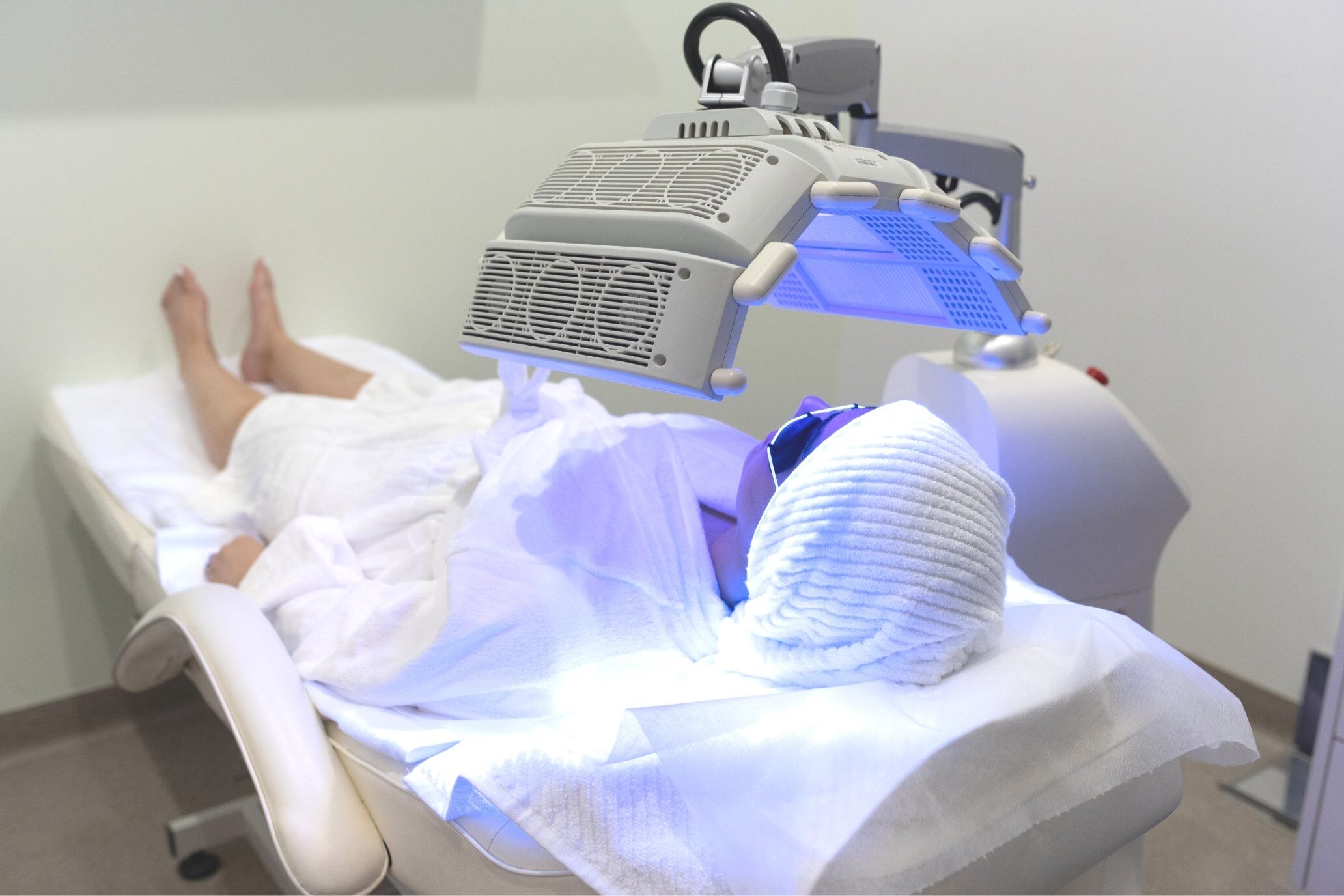
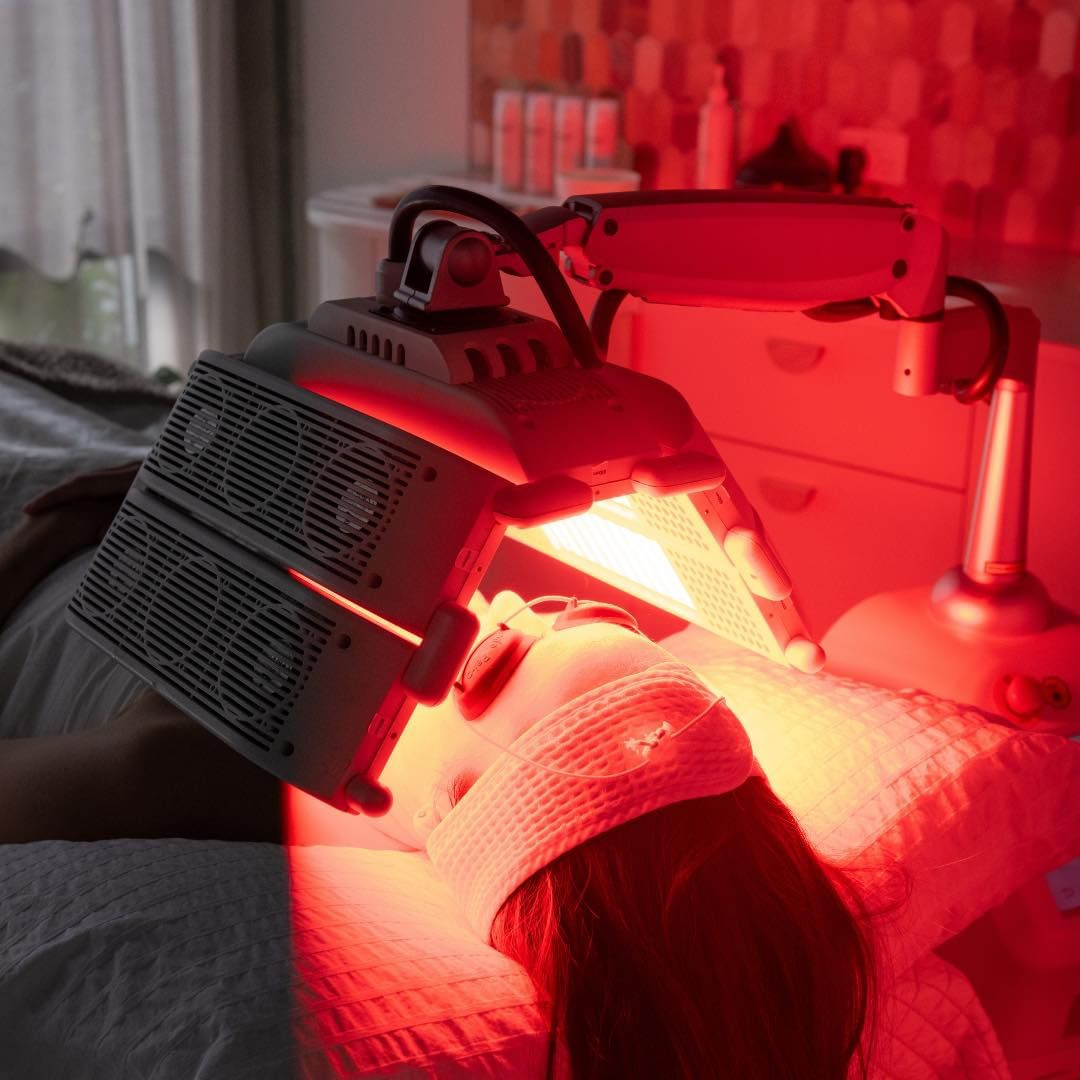
When it comes to full body LED light therapy, the market is proliferated with a wide spectrum of product specifications and options.
Some cheaper models on the market today still use old style fluorescent tubes that are currently being (and should by now have been) phased out (thanks to the growing disapproval of government agencies and groups that are concerned with environmental protection).
The reason they do this is because many of them are simply converted tanning beds that have been retrofitted with red fluorescent tubes.
Some of these devices even combine the harmful UV tanning wavelengths with red light wavelengths and call themselves “hybrid tanning” or “hybrid sunbeds”.
While they may look similar at first glance, they are completely different methods of producing light. Fluorescent lamps work by ionising inert gas (mercury vapour) while LEDs are a solid state technology.

There are significant disadvantages associated with using fluorescent lights :
- Fluorescent lights contain mercury which is a very hazardous material. The risk of exposure increases if the fluorescent tubes are made of glass.
- The longevity of fluorescent lights is poor. They further degrade/age significantly from frequent switching on and off (more than every 3 hours)
- Fluorescent lights are inefficient and produce far less luminous intensity per watt. A lot of the energy produced is wasted as heat and electrical losses.
- The light produced is omnidirectional which presents more inefficiencies/wastage as the light output is not focused on the target cells.
- All fluorescent lights emit a small amount of UV radiation.
- Many fluorescent lights have flicker which can be irritating to humans and have potential health implications.
There has been concern about salon owners removing the UV-emitting tanning lamps from sun beds with red light and replacing them with red lamps. In US, the FDA has ruled that “unless and until such device receives 510(k) clearance or premarket approval from FDA, it would be an adulterated and misbranded device that may not be marketed for sale.” [1]
In addition, even when some of these non-purpose-built retrofitted tanning beds have been replaced with LEDs, they are not engineered with the proper cooling and calibration of the red light sources.
At Aesthetic Bureau, our photobiomodulation systems (including the Total Xen Full Body LED Light Therapy) use only the most recent photodiode technologies to deliver the highest optimal dose of energy to skin cells without any of the health risks of harmful UV radiation.

As the only ISO 13485:2016 certified manufacturer of medical aesthetic devices in Australia, you can be assured that we have rigorous quality control and testing protocols adhered to in the production of every device.
Our founder, Trevor Neale, is a biomedical engineer with over 30 years’ experience in providing customers with quality medical aesthetic solutions and support designed specifically for the Australian market. We are partnered with aesthetic medical practitioners, dermatologists, beauty therapists, dermal therapists, integrated health practitioners, sporting clubs and health & fitness centres across Australia.
Aesthetic Bureau’s light-based medical aesthetic devices are listed on the ARTG website (and can be found by searching “Australian Aesthetic Devices Pty Ltd”).
To learn more about our photobiomodulation systems (LED therapy devices), click here to visit our new Xen website.
View our full range of medical aesthetic devices.