Sleep support has become one of the fastest-growing service categories in Australian aesthetic and wellness clinics. As clients look beyond skin outcomes toward broader recovery and wellbeing, many practice owners are asking the same question:
do red light therapy devices for sleep actually hold up under scrutiny, and if so, what should a clinic look for before investing in one?
The answer lies in understanding the underlying science of photobiomodulation, reading the research with a clear eye, and matching device specifications to protocols that are actually supported by clinical evidence rather than marketing claims.
The Science Behind Red Light and Sleep
Red light therapy, also known as photobiomodulation, works by delivering specific wavelengths of light, typically in the 630 to 660 nanometre red range and the 810 to 850 nanometre near-infrared range, to stimulate cellular activity.
At a mechanistic level, this exposure is understood to support mitochondrial function and ATP production, the energy-generating processes within cells that underpin tissue repair and cellular recovery.
For sleep specifically, the relevant mechanism relates to circadian regulation. Unlike blue light, which strongly suppresses melatonin production, red wavelengths appear to have a comparatively minimal effect on melatonin suppression.
This distinction matters because melatonin is the hormone most directly responsible for initiating and maintaining sleep. By avoiding the circadian disruption associated with shorter wavelengths, red light exposure in the evening may allow the body’s natural sleep-wake cycle to proceed with less interference.
Researchers have also proposed a secondary pathway involving cortisol. Evening light exposure that avoids melatonin suppression may support lower cortisol levels, which in turn is associated with faster sleep onset and more stable sleep architecture.
What the Research Actually Shows
Clinics considering red light therapy for sleep should be aware that the evidence base, while genuinely promising, is still developing.
Randomised controlled trials targeting insomnia populations have used transcranial photobiomodulation protocols with near-infrared light, delivered over a small number of consecutive sessions, and reported meaningful improvements on the Pittsburgh Sleep Quality Index, a validated clinical measure of sleep quality.
Separate controlled research involving athletes has similarly linked short courses of red light exposure to improved sleep scores and higher serum melatonin levels compared to placebo conditions.
A broader meta-analysis pooling more than twenty studies found that light therapy produced measurable sleep improvements, though the authors were careful to frame it as a useful adjunct alongside behavioural sleep strategies rather than a standalone treatment for clinical insomnia.
It is worth noting that not every study has produced positive findings. At least one double-blind trial found no significant circadian or melatonin effect from near-infrared exposure in people with only mild sleep complaints, and another study found that a full hour of red light exposure directly before bed increased alertness in some participants rather than promoting relaxation.
This is a useful reminder that protocol design, including session duration, timing, and wavelength selection, materially affects outcomes. Clinics should treat any outcome claims with appropriate caution and rely on practitioner-observed results and published research rather than absolute guarantees.
Choosing Red Light Therapy Devices for Sleep: Key Considerations
For clinics evaluating red light therapy devices for sleep as part of an evening recovery or wellness offering, several factors distinguish a well-specified system from one that is unlikely to deliver consistent, repeatable protocols.
Wavelength range. Look for devices offering red light in the 630 to 660 nanometre range, near-infrared in the 810 to 850 nanometre range, or a combination of both, since this dual-wavelength approach reflects the pairing used across the majority of human photobiomodulation research.
Irradiance and dosing control. Consistent, clinically relevant irradiance levels allow practitioners to replicate published protocols with confidence, rather than guessing at appropriate exposure times.
Session flexibility. Given that sleep-focused research has used session durations ranging from ten to thirty minutes across varying frequencies, a device that allows practitioners to adjust timing and intensity supports more individualised, evidence-aligned client protocols.
Full-body versus targeted delivery. Some protocols in the literature have used full-body exposure, while others have focused on more targeted areas. Clinics offering broader recovery and wellness services may find value in systems capable of full-body light exposure, which can support a wider range of applications beyond sleep alone, including circulation and general recovery support.
Manufacturing standards and safety compliance. Devices manufactured to ISO 13485:2016 standards give clinics confidence in consistent build quality, safety testing, and long-term reliability, which matters for a device used regularly across a busy client schedule.
The Best Red Light Therapy Device for Sleep Is the One Matched to Your Clinic’s Protocols
There is no single universally superior device, and clinics should be wary of any supplier claiming otherwise. The best red light therapy device for sleep for a given practice depends on the treatment menu already in place, the space available, and whether the clinic intends to combine sleep support with other applications such as skin rejuvenation or general recovery.
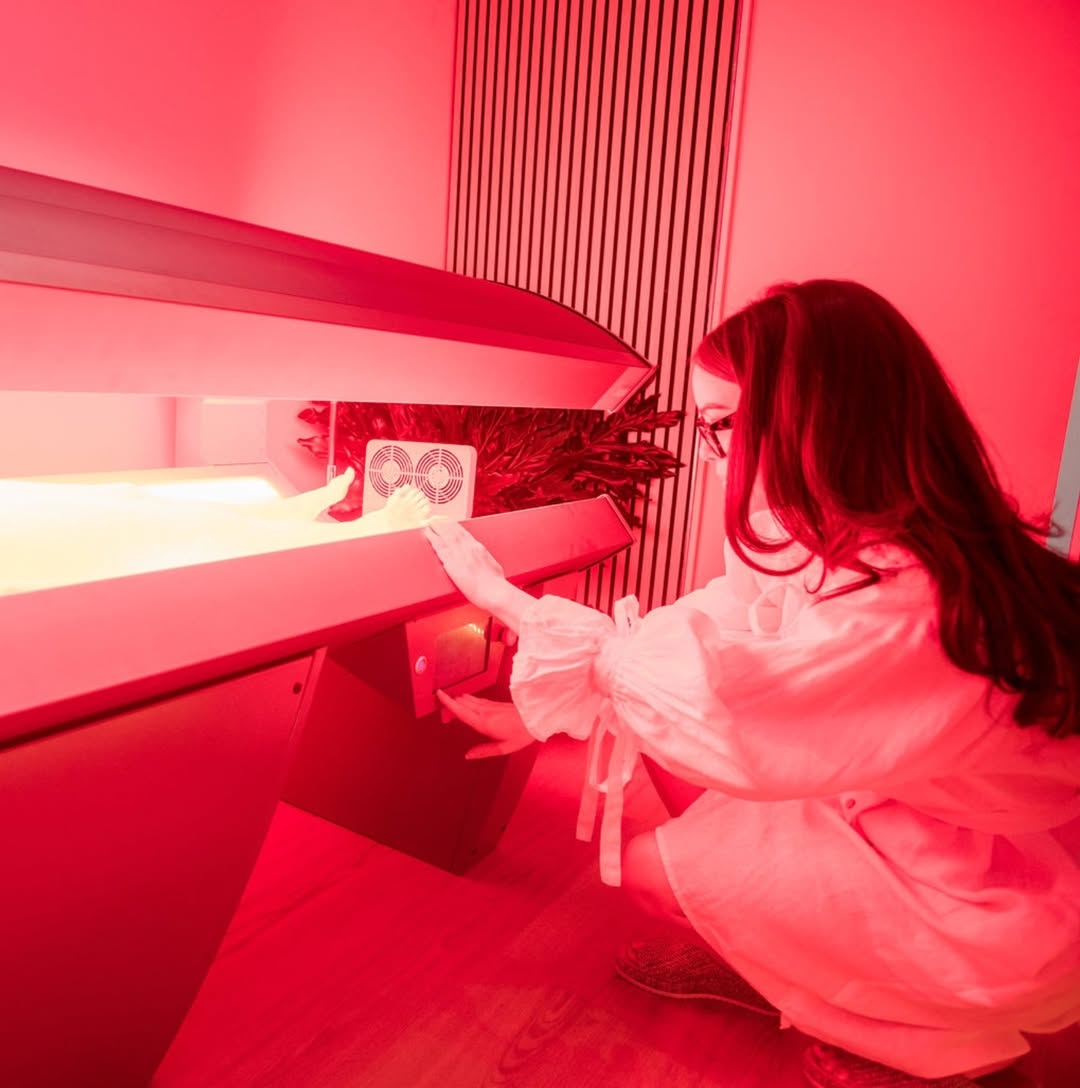
For clinics looking to offer full-body evening light exposure as part of a broader recovery and wellness service, the Total Xen Red Light Bed is built to deliver consistent, full-body light exposure, supporting practitioners who want to combine relaxation-oriented sessions with recovery and rejuvenation outcomes across a single piece of equipment.
For clinics wanting a more versatile, targeted option that can also support skin-focused protocols alongside general wellness applications, the LED Light Therapy Machine offers practitioners the flexibility to tailor wavelength and session parameters to individual client needs.
Positioning Sleep-Focused Services Within a Clinic’s Business Model
Beyond the clinical rationale, there is a genuine business case for clinics to consider. As client interest in recovery, stress reduction, and sleep support continues to grow, practices that can offer evidence-informed light therapy protocols are well placed to expand their treatment menu and improve client retention.
Practitioners report that clients who add evening recovery sessions to existing skin or wellness appointments often return more frequently, supporting both client satisfaction and overall clinic performance.
As with any technology-led service, the return on investment depends on reliable equipment, correctly calibrated protocols, and practitioners who understand the evidence well enough to set realistic client expectations. Aesthetic Bureau supports this with training resources designed to help practitioners apply devices confidently and in line with current research.
A Manufacturer’s Perspective
Aesthetic Bureau has spent more than thirty years working alongside engineers and clinicians to develop and supply medical-grade aesthetic technology to the Australian market.
As an Australian-owned manufacturer certified to ISO 13485:2016 standards, the company’s role is to provide clinics with reliable, well-specified devices and the training needed to apply them appropriately, not to make claims about individual treatment outcomes.
Clinics considering red light therapy devices for sleep are encouraged to review the published research relevant to their intended protocols, and to choose equipment from manufacturers who can demonstrate manufacturing standards, engineering credibility, and a genuine commitment to practitioner education.