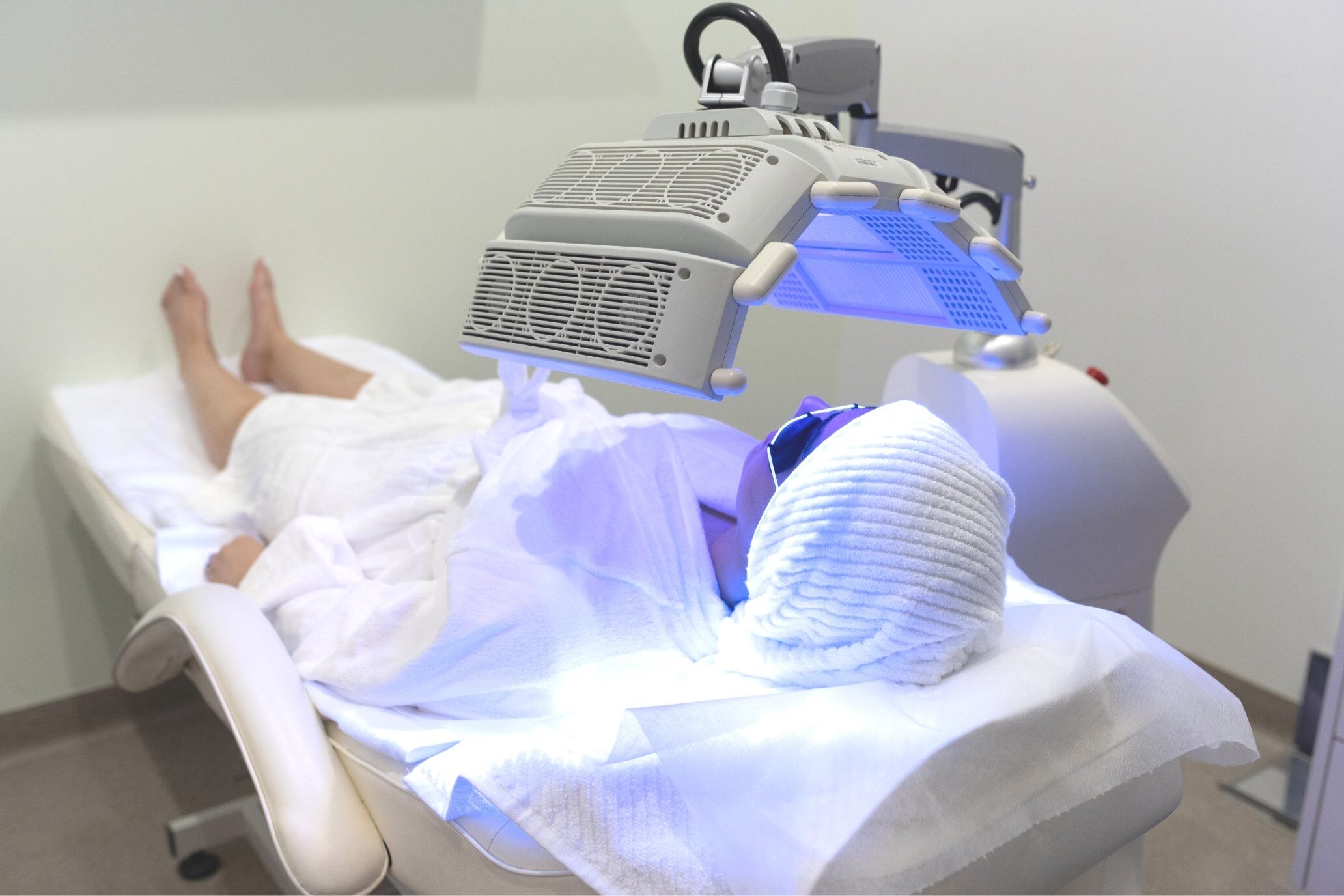
The unprotected human eye is extremely sensitive to laser radiation and can be permanently damaged from direct or reflected beams. Protection in the form of laser glasses, laser goggles, or laser shields/barriers provides some level of defence to insure against injury. Many professionals also use IPL safety glasses to protect against intense pulsed light exposure. The operating parameters of your laser, or a Certified Laser Safety Officer (LSO), will determine what forms of protection you should have in place.
If you do not have a CLSO on staff or information in your laser manual, please contact us and our laser safety experts can help you.
There is an ever-expanding array of complex and sophisticated laser systems used in material processing. Laser safety officers in the military, medical, research and development applications demand high-performance laser safety eyewear options for their laser personnel. When selecting the most appropriate laser protective eyewear solutions the LSO needs to consider the working environment, viewing conditions, operational and performance specifications of the laser as well as beam delivery systems.
The ultimate goal in selecting laser eye protection is to provide comfortable and stylish eyewear that laser personnel will wear with protection levels (OD) that properly attenuates or reduces potentially hazardous laser exposures to levels safely below maximum permissible exposure (M.P.E.) levels.
The following factors are needed to consider when choosing IPL/Laser safety glasses:
Wavelength
Wavelength is expressed in nanometers (nm), or micrometres (µm). There are typically two wavelengths associated with a laser, the aiming beam wavelength and the operating wavelength. Typically the aiming beam is “eye-safe” and the operating beam is the one you need protection from. Multiple‑wavelength systems may require a custom filter or multiple eyewear.
Power / Energy
Lasers operate as continuous wave or pulsed systems. For continuous wave, you need the power of the laser, expressed in a form of Watts. For single or multi‑pulsed lasers you need the energy (joules), the pulse length (seconds), and the repetition rate (Hertz).
Viewing Conditions
Direct viewing is used to describe laser environments where there are no measures put in place to prevent accidental direct exposure to part or all of the beam.
Diffuse viewing is used to describe laser environments when protection from scattered radiation is only required.
Comfort
The weight, shape, and fit can significantly affect your decision on laser glasses. Many of our laser glasses and goggles are designed to offer universal fit and some can be adjusted to meet an individual’s needs. Polycarbonate laser glasses are lighter, less expensive, and usually offer slightly lower OD’s but may have lower visibility. Glass filters can be heavier but usually offer higher OD�s and visibility. Coated filters proved high OD’s, can be lighter and have excellent visibility.
Field of View
Being able to see as much as possible is always important. Some laser glasses have solid side shields to offer additional protection but may restrict your field of view.
Visibility of Colour
Colours and visibility of specific colour ranges may be significantly affected by laser glasses or goggles. For example, if you require high visibility and your laser operates outside visible wavelengths you should pay close attention to the visible transmission. Sometimes VLT % is used to express the amount of visibly transmitted light that is permitted through a laser filter. Keep in mind that VLT % is an average of visible light transmission over the whole visible spectrum.
What is OD (Optical Density)?
Optical Density (OD) is a measure of the radiation permitted to pass through a filter and it’s determined by the filter. i.e. an OD of 2.0 allows 1/100 of the laser light energy to pass through the filter. If your eyewear is marked with an OD of 4 or greater at 755 nm and your laser requires an OD of 6 or greater at 755 nm your laser glasses will not provide enough protection from your laser and you could sustain a serious injury. OD is determined by several factors and should only be calculated by an expert.
What is wavelength?
Wavelength is the distance between repeating units of a propagating wave of a given frequency. What makes a laser unique is that usually has a very specific wavelength(s) that it operates at in the Electromagnetic Radiation spectrum. Electromagnetic radiation is classified into types according to the frequency of the wave. These types include radio waves, microwaves, terahertz radiation, infrared radiation (IR), visible light, ultraviolet radiation (UV), X-rays and gamma rays. Radio waves have the longest wavelengths and Gamma rays have the shortest. A small window of frequencies, called the visible spectrum of light, is sensed by the eye of various organisms, with variations on the limits of this narrow spectrum. Many lasers operate outside the visible spectrum but still require protection… what you can’t see will hurt you.
Different wavelengths require specific protection at a particular level. Lasers may also operate at different wavelengths and require different levels of protection at each wavelength. i.e. doubled Nd: YAG laser operates at both 532 nm and 1064 nm with a required OD of 5 for both wavelengths. If your laser glasses don’t provide protection at both wavelengths you will need two different pairs of eyewear. The colour of the lens in laser safety glasses or goggles does not determine the wavelengths that it offers protection from. Most laser glasses offer specific wavelength protection to provide the best visible light transition. Do not assume that laser glasses offer protection from all lasers!
SHOP OUR RANGE OF LASER SAFETY EYEWEAR